
Construction
The full
floating canvas
Built Different
A jacket is only as honest
as the layer you cannot see
It moves with you
The canvas floats between cloth and lining rather than being glued to it, so the chest breathes and follows the body instead of resisting it.
It never bubbles
Fused jackets rely on adhesive that eventually separates after dry cleaning. A floating canvas has nothing to fail — there is no glue in the garment.
It learns your shape
Horsehair and wool take a memory over the first year of wear. The jacket ends up shaped to your posture in a way no pattern alone can achieve.
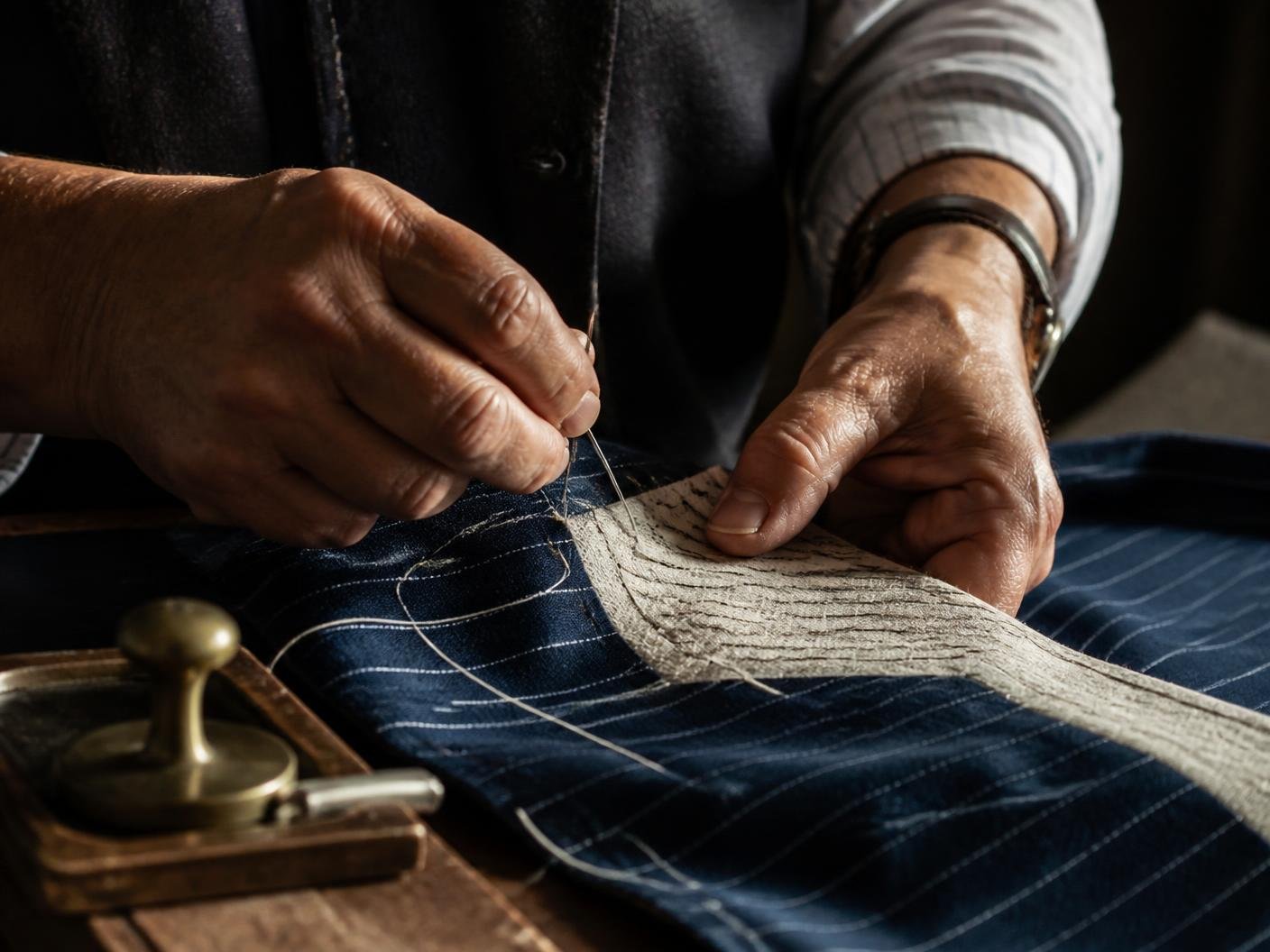
A Labour of Time and Skill
Thousands of stitches,
none of them visible
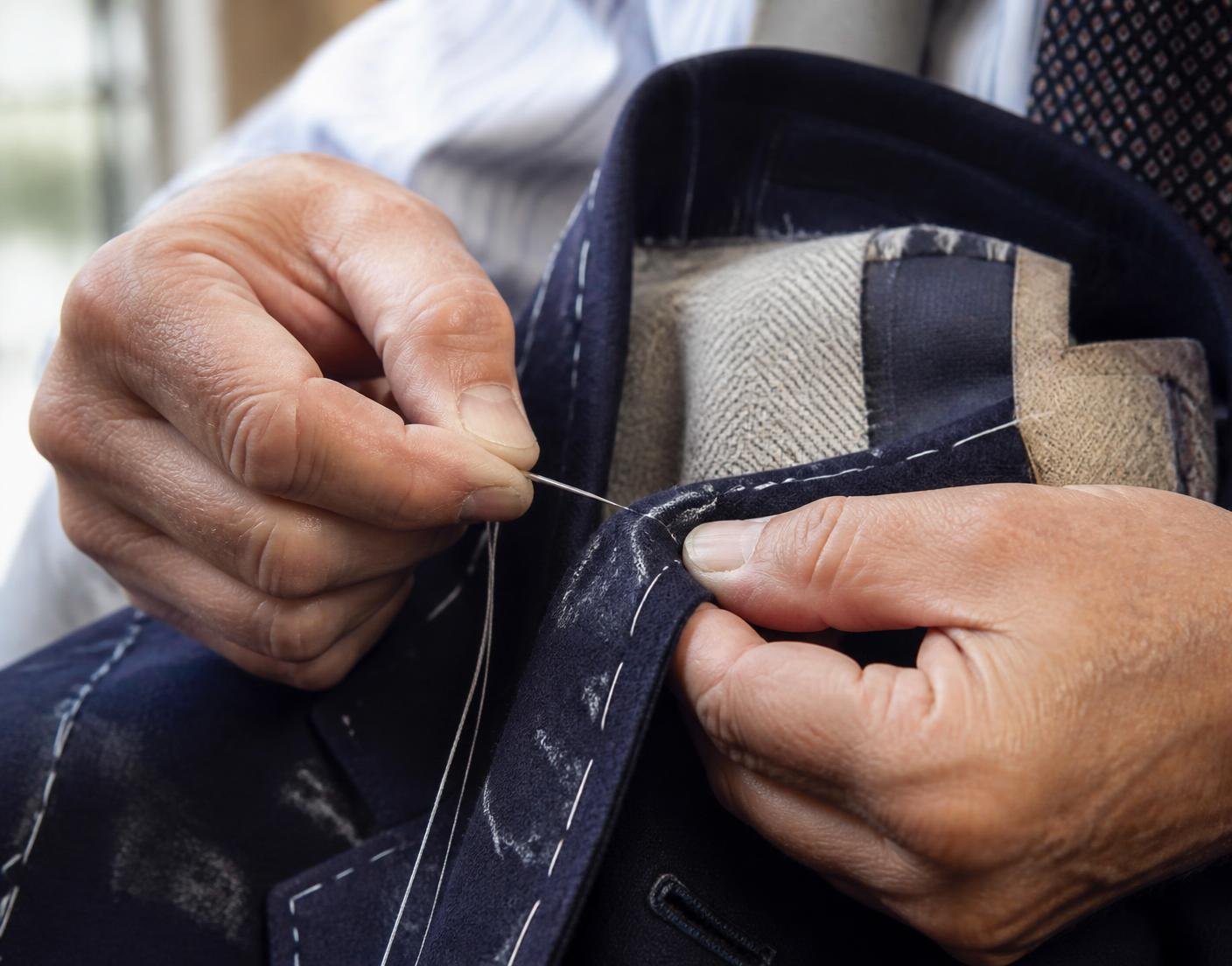
Canvassed vs Fused
The difference, line by line
Chest structure
Meraki
Full floating horsehair canvas, hand-padded
Fused
Fused interlining glued to the cloth
Lapel roll
Meraki
Soft, three-dimensional, worked by hand
Fused
Pressed flat, sharp crease at the fold
Lifespan
Meraki
Decades, with alterations and pressing
Fused
Three to five years before delamination
Drape
Meraki
Cloth hangs from the shoulder freely
Fused
Cloth stiffened by adhesive backing
Repairability
Meraki
Fully re-cut and altered from inlays
Fused
Limited, adhesive prevents reshaping